

Agile Project Management: How to Deliver Better Projects, Faster

29 October, 2025
Share this article
Table of Contents
In today’s fast-paced business environment, projects move faster than ever before.
Customer expectations shift constantly, new competitors enter the market overnight, and technologies evolve at a speed that challenges even the most experienced teams. In such a dynamic landscape, sticking to rigid plans and lengthy development cycles is no longer enough.
Agile project management emerged as a response to this reality.
Rather than relying on strict plans and heavy documentation, Agile embraces flexibility, collaboration, and continuous delivery. It’s not just a methodology:it’s a mindset that allows teams to adapt quickly, learn continuously, and deliver value in smaller, faster increments.
At its core, Agile helps organizations shift their focus from simply completing projects to creating value.
Teams work in shorter cycles, constantly reviewing progress, incorporating feedback, and adjusting direction based on new insights. This iterative approach ensures that the end product is not only completed on time but also closely aligned with customer needs and market realities.
For companies aiming to remain competitive, Agile is more than a trend: it’s becoming a necessity. It empowers teams to respond to change, innovate faster, and deliver products and services that truly make an impact.
In this article, we’ll explore what agile project management is, its key principles, the most popular frameworks, and how it can transform the way your organization delivers results.
What is Agile Project Management?
Agile project management consists of adding an iterative approach to planning, executing, and delivering projects.
Instead of following a fixed plan from start to finish, Agile focuses on flexibility, collaboration, and continuous improvement, breaking work into smaller, manageable cycles called iterations or sprints.
Each iteration delivers a functional outcome that can be reviewed, tested, and improved before moving on to the next stage.
The goal of Agile is not simply to complete a project. Its purpose is to deliver ongoing value to customers and stakeholders while remaining adaptable to change. This means that a product or service evolves over time, incorporating new insights, user feedback, and shifting market demands as it develops.
A brief history of Agile
The origins of Agile date back to the early 2000s when a group of software developers gathered in Utah to rethink how projects were being managed.
Frustrated with slow, rigid processes that often delivered outdated results, they drafted the Agile Manifesto, a document that redefined how teams could approach complex work.
The manifesto emphasized four core values:
- Individuals and interactions over strict processes
- Working solutions over excessive documentation
- Customer collaboration over contract negotiation
- Responding to change over following a fixed plan
These principles laid the foundation for what we now know as agile methodology. Over the years, the approach expanded beyond software development into sectors such as marketing, product design, education, and business strategy.
Key Characteristics of Agile Project Management
The strength of agile project management lies in a few essential principles that shape how teams plan, collaborate, and deliver results. Below are four of the most important characteristics that define this approach.
1. Short Work Cycles and Iterative Approach
Agile divides projects into short, repeatable cycles known as iterations or sprints. Each cycle focuses on delivering a functional part of the final product rather than waiting until the end of the project for a complete solution.
This iterative approach allows teams to test assumptions early, gather feedback, and make adjustments before moving forward. It also reduces risk by ensuring that any mistakes are identified and corrected quickly, long before they become costly problems.
For example, a software team might release a basic version of an app after a two-week sprint, then refine and expand it in subsequent iterations based on user feedback.
2. Continuous Collaboration and Customer Feedback
One of the pillars of agile methodology is ongoing communication. Agile projects involve frequent interactions not only within the team but also with stakeholders and customers.
This collaboration ensures that the project remains aligned with business goals and evolving user needs. Regular reviews, demos, and stakeholder meetings keep everyone on the same page and allow for quick course corrections when requirements change.
For example, a product team developing a new e-commerce feature may present updates to customers every sprint, gathering feedback that directly influences the next round of development.
3. Adaptability and Value-Driven Prioritization
Agile projects are built to adapt. Instead of following a strict plan, teams work from a product backlog (a prioritized list of tasks, features, or user stories) that can evolve as new information emerges.
This ensures that the team is always focused on the tasks that deliver the highest value to the business and the customer. By re-prioritizing regularly, organizations avoid wasting time on features that may no longer be relevant.
For instance, if market trends shift mid-project, a team can quickly adjust its backlog to focus on new functionalities that meet current customer expectations.
4. Self-Organizing, Proactive Teams
Agile teams are cross-functional and empowered to make decisions about how they complete their work. Instead of waiting for top-down instructions, they take ownership of planning, execution, and improvement.
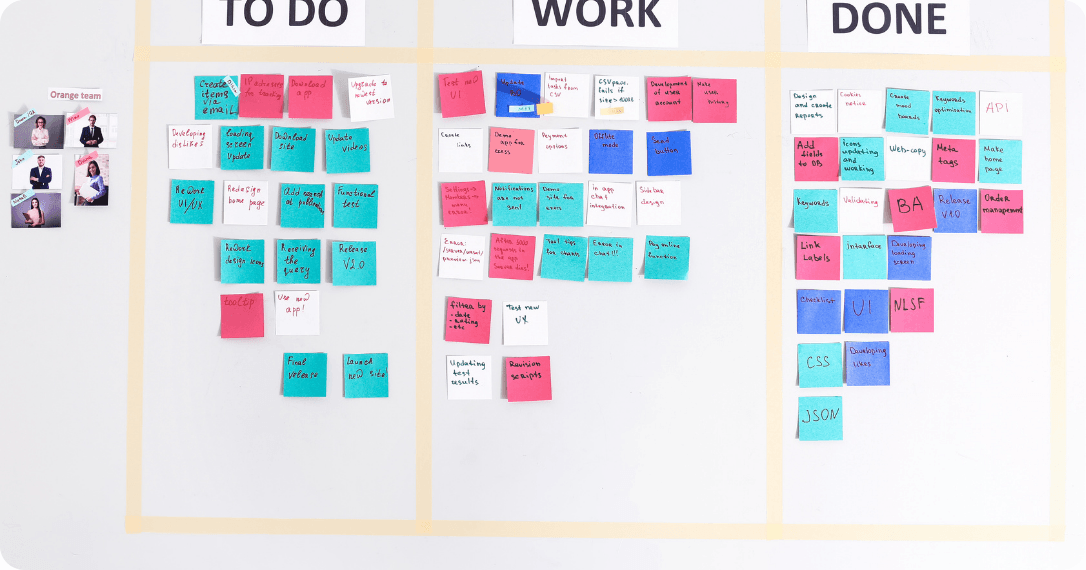
This autonomy encourages innovation and accountability while speeding up decision-making. Transparency tools like Kanban boards and sprint reviews ensure that everyone understands the project’s current status and next steps.
In a Scrum team, developers, designers, and testers collaborate daily to plan tasks, resolve blockers, and deliver incremental results without needing constant managerial oversight.
Together, these principles create a project environment that is responsive, collaborative, and focused on delivering real value. Agile is not just about working faster; it is about working smarter, learning continuously, and ensuring that every iteration moves the project closer to success.
Agile in Action: Fast-Food Startup Case Study
To understand how agile project management works, imagine a small fast-food startup launching its first two locations. Its mission is simple: offer great-tasting burgers, fast service, and affordable prices.
But the reality is far more complex. The market is saturated with competitors, customer preferences change constantly, and profit margins are tight.
Rather than locking in a final menu or business plan from the start, the team decides to implement agile methodology to guide its growth. The goal is to adapt quickly, learn continuously, and deliver value based on real customer feedback.
Step-by-Step: Building the Perfect Burger with Agile
1. Defining clear objectives
The team starts by setting measurable goals: reduce service time, improve profit margins, and achieve high customer satisfaction scores. These metrics become the benchmarks for every iteration.
2. Launching a minimum viable menu
Instead of a full product lineup, the team introduces a basic menu: one signature burger, two sizes of fries, and two drink options. This streamlined offering helps them validate core assumptions before expanding.
3. Working in sprints
They plan two-week sprints, holding daily meetings to discuss preparation times, ingredient use, and customer reactions. At the end of each sprint, they review results and share insights with stakeholders.
4. Collecting and analyzing feedback
A small group of regular customers is invited to tastings and feedback sessions. Questions focus on taste, portion size, pricing, and likelihood of repeat purchases. All data is recorded and added to the product backlog.
5. Iterating based on results
The team experiments with different buns, cheeses, and cooking methods in subsequent sprints. They A/B test portion sizes and ingredient variations to see what resonates most with their audience.
6. Retrospective and continuous improvement
After several iterations, the team conducts a sprint retrospective to evaluate what worked, what didn’t, and what needs to change. Over time, their menu evolves into a tightly focused offering that balances quality, profitability, and customer demand.
Business Impact
Within months, the results are clear: average service time drops, customer satisfaction scores rise, and waste is significantly reduced. The team uses real-time data to make decisions, and the menu is no longer a gamble.
This example shows that agile project management is not limited to software or tech. It can be applied to operations, product development, marketing, and even restaurant management.
The key is the same everywhere: short cycles, rapid feedback, and ongoing improvement.

Agile Frameworks: The Core Methodologies Behind Agile Project Management
While agile project management is a mindset and approach, it becomes actionable through specific frameworks.
These frameworks provide structure, practices, and tools that help teams plan, execute, and deliver projects in short cycles. Each framework has its own strengths and is suited to different types of projects, team sizes, and organizational needs.
The three most widely used frameworks are Scrum, Kanban, and Lean. All of them are built on the same agile principles such as collaboration, continuous improvement, and rapid delivery.
Scrum
Scrum is one of the most popular agile project management frameworks. It organizes work into short cycles called sprints, typically lasting two to four weeks. At the end of each sprint, the team delivers a functional increment of the product, ensuring continuous value delivery.
- The team defines priorities at the beginning of each sprint and pulls tasks from the product backlog.
- Daily stand-up meetings help track progress, address challenges, and maintain alignment.
- At the end of the sprint, the team delivers a usable product increment and conducts a sprint retrospective to evaluate performance and identify improvements.
Kanban
Kanban is a more flexible agile methodology focused on visualizing work, limiting work in progress, and optimizing flow. It does not require fixed iterations. Instead, tasks move continuously through stages until completion.
- All tasks are displayed on a Kanban board, typically divided into columns like "To Do", "In Progress", and "Completed".
- Team members pull tasks as capacity allows, which helps prevent bottlenecks and keeps the workflow balanced.
- The focus is on continuous delivery, incremental improvements, and reacting quickly to new priorities.
Lean
Lean is both a mindset and a project management approach focused on delivering maximum customer value with minimal waste. It emphasizes efficiency, continuous learning, and the elimination of unnecessary steps in any process.
- Teams identify value from the customer’s perspective and map the value stream to eliminate non-essential activities.
- Processes are continuously improved through small, incremental changes.
- The focus is on faster delivery, reduced costs, and improved quality.
Benefits of Agile Project Management
1. Greater Adaptability and Faster Response to Change
Traditional project management often struggles when priorities shift mid-project. Agile, on the other hand, is built to embrace change.
Its iterative approach allows teams to pivot quickly based on new market conditions, user feedback, or strategic goals. Each sprint or iteration becomes an opportunity to reassess priorities and adjust direction without disrupting the entire project.
Example:
A fintech company launches a new payment app and receives unexpected user feedback requesting biometric login. Instead of waiting for a major update months later, the Scrum team adjusts the product backlog and delivers the feature in the next sprint, maintaining competitive advantage and customer trust.
2. Improved Product Quality
Frequent testing, feedback loops, and incremental delivery ensure that issues are identified and resolved early. Rather than discovering defects at the end of a project, agile teams test and refine continuously.
This not only reduces technical debt but also results in products that better meet customer expectations.
Example:
A healthcare startup developing a patient portal runs user tests at the end of each sprint. Because feedback is integrated immediately, the final product is intuitive, compliant, and aligned with real user needs — avoiding costly redesigns after launch.
3. Higher Customer Satisfaction and Value Delivery
Agile methodologies prioritize customer collaboration over rigid contract terms. By involving stakeholders throughout the project, teams ensure that deliverables align with real-world needs.
Regular releases provide visible progress and continuous value, building stronger client relationships and long-term trust.
Example:
A digital marketing agency presents campaign drafts every two weeks instead of delivering a final version after three months. This allows clients to refine messaging in real time and ensures that the final product resonates with the target audience.
4. Increased Team Productivity and Engagement
Agile empowers teams to self-organize, make decisions, and take ownership of their work. This autonomy fosters motivation and accountability while eliminating unnecessary layers of management.
The regular cadence of planning, review, and sprint retrospectives creates a culture of learning and continuous performance improvement.
Example:
A product development team running two-week sprints sets measurable goals and sees immediate results from their efforts. The visibility of progress and the direct impact of their decisions lead to higher morale and significantly improved productivity.

Tips for Implementing agile Project Management
1. Start with a Pilot Project
Rather than attempting a full-scale transformation from day one, begin by applying agile methodology to a single, low-risk project.
This controlled environment helps teams understand core concepts such as the product backlog, sprint planning, and retrospectives without overwhelming them. It also allows you to identify gaps and refine your approach before scaling.
2. Invest in Training and Continuous Coaching
A common reason agile initiatives fail is lack of understanding. Training is crucial for helping teams internalize agile principles and adopt the right practices. Workshops, online courses, and agile certifications can provide a strong foundation.
Additionally, having an experienced Scrum Master or agile coach guide the first few iterations ensures teams follow best practices and avoid common pitfalls.
3. Redefine Leadership Roles
In agile environments, leadership is less about control and more about facilitation. Project managers transition into roles that focus on enabling collaboration, removing obstacles, and supporting self-organizing Scrum teams.
Empowering teams to make decisions fosters accountability and accelerates delivery.
4. Foster a Culture of Continuous Improvement
Agile thrives in organizations that value experimentation and learning. Encourage teams to treat each sprint as an opportunity to reflect, improve, and innovate.
Regular retrospectives should focus on actionable insights that make the next iteration more efficient. Over time, this mindset drives lasting change across the organization.
Remote work
Keep up to date with our most recent articles, events and all that Pluria has to offer you.
By subscribing to the newsletter you agree with the privacy policy.

The future is hard to predict.
Unfortunately, there’s no crystal ball that can tell us exactly what will happen. Yet, there are structured methods that[...]
22 October, 2025
In today’s fast-paced business environment, projects move faster than ever before.
Customer expectations shift constantly, new competitors enter [...]
29 October, 2025
More often than not, the best ideas do not develop in a linear fashion.
As a matter of fact, they usually emerge from a single word, an unexpected conn[...]
07 November, 2025